
If you have ever wondered why restaurant-style chicken tortilla soup tastes so much deeper and richer than the version made from a can, the secret is hiding in plain sight: fire.
Charring your vegetables is the single most impactful upgrade you can make to your soup. It transforms flat, one-dimensional flavors into a complex, smoky, and deeply savory broth that tastes like it has been simmering for hours.
Quick Answer 💬
How to Char Tomatoes and Onions for Chicken Tortilla Soup
To properly char tomatoes and onions, place whole Roma tomatoes and thick onion wedges directly over an open gas flame, under a hot oven broiler, or in a smoking-hot cast-iron skillet. Cook them until the skins are blackened, blistered, and soft (about 10–15 minutes). This process caramelizes the vegetables’ natural sugars and infuses the soup base with an authentic, deep smoky flavor.
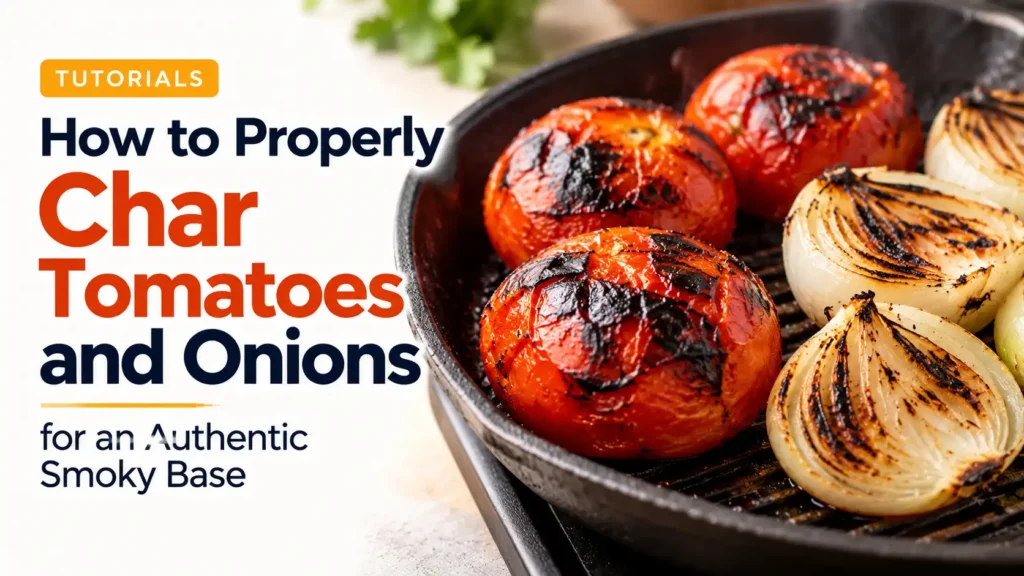
Whether you have a gas stove, a standard oven, or just a heavy pan, here is your complete, step-by-step guide to mastering this essential technique.
Table of Contents
Why Charring Makes All the Difference
When you apply high, direct heat to tomatoes and onions, two amazing culinary reactions happen:
- The Maillard Reaction: The high heat causes the natural sugars in the vegetables to caramelize. This creates rich, savory, and slightly sweet flavor compounds that boiling or simmering simply cannot achieve.
- Authentic Smokiness: The blackened, blistered skins impart a subtle, wood-fired smokiness. This mimics the traditional Mexican method of roasting ingredients on a comal (a flat griddle) or over an open fire.
This charred base is the foundation of an authentic sopa de tortilla. Once blended, it gives your broth a beautiful, deep-red color and a restaurant-quality depth that will make your kitchen smell incredible.
What You Need to Make Charred Tomatoes and Onions for a Smoky Base
You do not need fancy equipment to get great results. Choose the method below that best fits your kitchen setup:
The Vegetables:
- 4–5 medium Roma or plum tomatoes (they have less water and more flesh than standard round tomatoes)
- 1 large yellow or white onion
Optional Aromatics:
- 2–3 cloves of garlic (unpeeled)
- 1–2 fresh jalapeños or serrano peppers for extra depth
The Tools:
- Kitchen tongs
- A rimmed baking sheet (if using the oven)
- A heavy cast-iron skillet (if using the stovetop method)
3 Easy Ways to Char Your Soup Base
Method 1: The Direct Flame (Best for Authentic Flavor)
This is the traditional, fastest way to get a genuine smoky flavor, but it requires a gas stovetop.
- Prep the Veggies: Leave the tomatoes whole. Cut the onion into 4 to 6 thick wedges, keeping the root end intact so the layers do not fall apart. Leave the garlic cloves in their papery skins.
- Turn on the Heat: Turn a gas burner to medium-high.
- Char Directly: Use tongs to place the tomatoes, onion wedges, and garlic directly onto the metal grate over the flame.
- Rotate Frequently: Turn the vegetables every 2–3 minutes. You want the skins to blacken and blister all over, and the vegetables to soften, but you do not want them to turn entirely to ash. This takes about 10–12 minutes.
- Rest and Peel: Remove from the heat. Once cool enough to handle, peel off the papery skin from the garlic. You can leave the blackened bits on the tomatoes and onions—that is where the flavor lives!
Method 2: The Oven Broiler (Best for Large Batches)
If you have an electric stove or are making a massive batch for a crowd, the broiler is your best friend.
- Prep the Oven: Move your oven rack to the top position, about 4 to 6 inches below the broiler element. Turn the broiler to High and let it preheat for 5 minutes.
- Arrange on a Pan: Place the whole tomatoes, thick onion wedges, and unpeeled garlic on a rimmed baking sheet. Do not overcrowd them.
- Broil: Place the pan under the broiler. Watch it closely! Broil for 5–7 minutes until the tops are heavily blackened and blistered.
- Flip and Repeat: Use tongs to flip the vegetables over. Broil for another 5–7 minutes until the other side is charred and the tomatoes are collapsing and soft.
Method 3: The Cast-Iron Skillet (Best for Apartments)
No open flame and no broiler? A heavy skillet will still give you excellent caramelization.
- Heat the Pan: Place a dry cast-iron skillet over medium-high heat for 3–5 minutes until it is smoking hot. Do not add oil.
- Sear the Veggies: Place the tomatoes, onion wedges, and garlic in the dry pan. Press them down gently with a spatula to ensure maximum contact with the hot metal.
- Cook Undisturbed: Let them sit for 4–5 minutes until the bottom is deeply blackened.
- Flip and Finish: Flip the vegetables and cook for another 4–5 minutes until softened and charred on the second side.
Pro Tips for Maximum Flavor
- Save the Juices: When you move the charred tomatoes to a cutting board or blender, they will release a pool of smoky, flavorful juice. Scrape every drop of that liquid into your blender. It is liquid gold.
- To Peel or Not to Peel? For a rustic, hearty soup, leave the blackened skins on. If you prefer a perfectly smooth, velvety broth, you can peel the blackened skin off the tomatoes and onions before blending. Both ways are delicious and authentic.
- Blend While Warm: Blending the charred vegetables while they are still warm helps break them down into a smoother, more cohesive sauce for your soup base.
How to Use Your Charred Base in the Soup
Once your vegetables are charred and slightly cooled, drop them into a blender. Add your low-sodium chicken broth, a pinch of salt, and your favorite spices (like cumin and chili powder). Blend until completely smooth.
Pour this vibrant, smoky mixture directly into your pot with your shredded chicken, black beans, and corn. As it simmers, the flavors will meld into a rich, complex broth that tastes as if it came straight from a professional Mexican kitchen.
Common Questions
Can I char vegetables on an electric stove?
Not directly on the burner. Use the oven broiler or a cast-iron skillet instead. Both methods give you excellent char without an open flame.
Do I have to peel the tomatoes after charring?
No. Leaving the skins on adds a rustic texture and extra smoky flavor. If you want a smoother broth, peel them before blending.
What if my vegetables are not charring fast enough?
Your heat is too low. Turn up the burner or move the pan closer to the broiler element. You want high, direct heat for blackened skins.
Can I char the vegetables ahead of time?
Yes. Char them up to 2 days ahead. Store them in an airtight container in the fridge. Blend them into your soup base when you are ready to cook.
My onions are falling apart. What went wrong?
You probably cut them too thin or removed the root end. Keep the root intact and cut thicker wedges so the layers hold together.
Can I use this method for other soups?
Absolutely. This charred base works great for chili, enchilada soup, or any recipe that calls for a smoky tomato flavor.