
You’ve made the broth. You’ve toasted the chiles. You’ve charred the tomatoes. But when you ladle that soup into a bowl, something is missing. The broth tastes good, but it’s thin. It doesn’t have that velvety body that makes restaurant tortilla soup feel like a meal, not a starter.
The fix is probably already in your pantry, sitting next to the cornmeal. It’s called masa harina, and it’s the single most underrated thickener in Mexican cooking.
Quick Answer 🔎
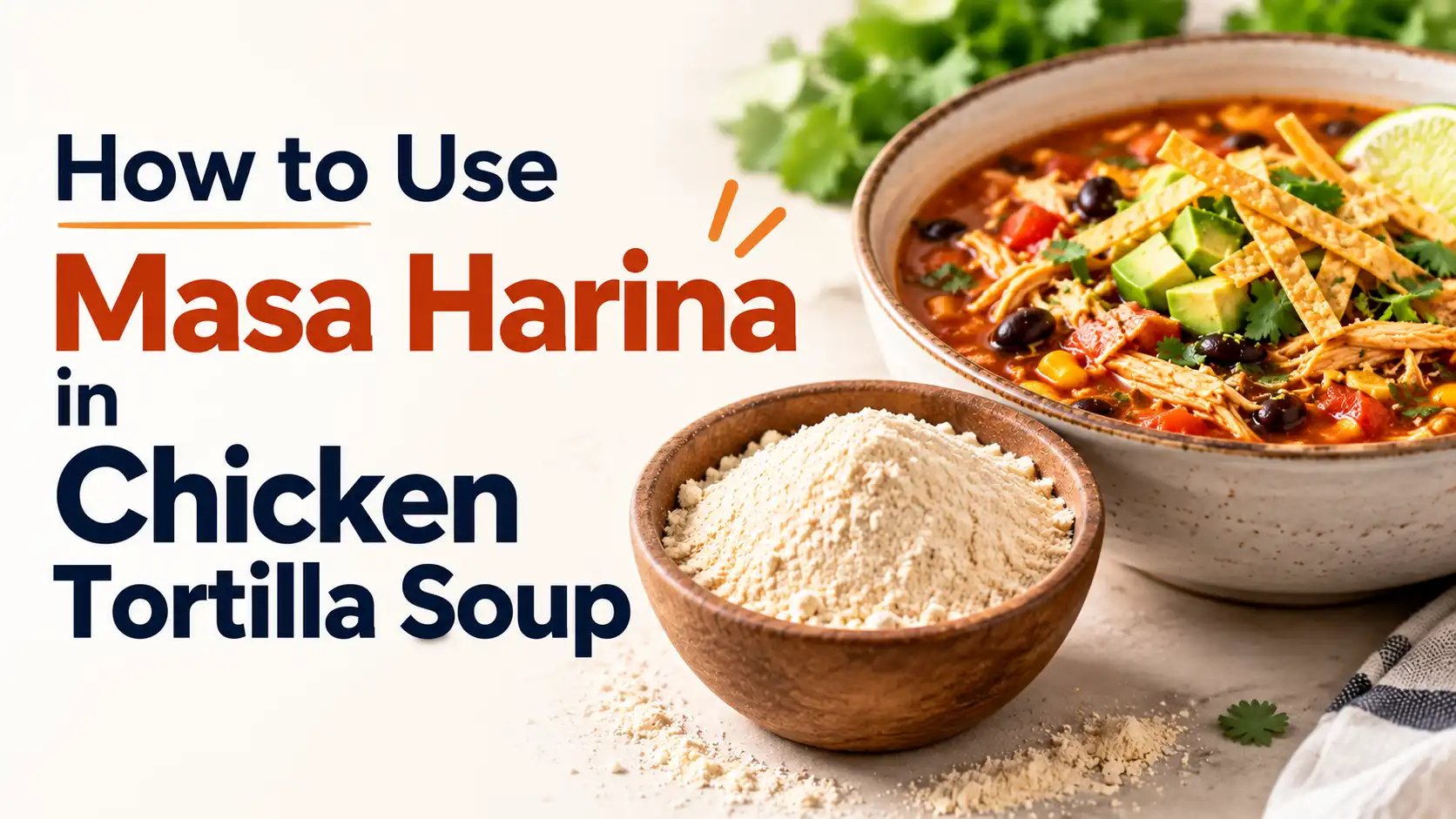
How to Use Masa Harina in Chicken Tortilla Soup
To use masa harina in chicken tortilla soup, whisk 2 tablespoons to 1/4 cup of masa harina with an equal amount of cold water or cool broth until smooth. This creates a slurry. Slowly pour the slurry into your simmering soup while whisking constantly. Simmer for 10 to 15 minutes until the soup thickens. Masa harina adds a subtle, toasted corn flavor that cornstarch and flour cannot replicate.
Whether you’re thickening a brothy soup or building a creamy version, here’s everything you need to know about this essential Mexican ingredient.
Table of Contents
What Is Masa Harina?
Masa harina literally translates to “dough flour” in Spanish. It’s the traditional flour used to make corn tortillas, tamales, and countless Mexican dishes.
Here’s how it’s made:
- Field corn (not sweet corn) is dried and treated with a lime-and-water solution. This process is called nixtamalization.
- The lime solution loosens the hulls from the kernels and softens the corn. It also releases niacin (vitamin B3) so your body can absorb it.
- The soaked corn is washed and ground into a dough called masa.
- That fresh masa is dried and powdered to become masa harina.
When you add water back to masa harina, you get masa again — a pliable dough ready for tortillas or tamales.
Fast Facts:
- Made from: Nixtamalized field corn
- Texture: Fine powder, similar to flour
- Flavor: Earthy, slightly tangy, with a toasted corn depth
- Gluten-free: Yes, naturally
- Main use: Tortillas, tamales, thickener for soups and stews
Why Masa Harina Is the Best Thickener for Tortilla Soup
Masa harina does two things that no other thickener can do at the same time.
1. It Thickens Without Making Soup Heavy
Masa harina gives your soup body — that velvety, almost creamy texture — without adding cream, butter, or cheese. It thickens the broth naturally, so the soup feels substantial but not heavy.
2. It Adds Authentic Corn Flavor
This is the big one. Cornstarch and flour thicken soup, but they don’t taste like anything. Masa harina thickens and adds a subtle, toasted corn flavor that echoes the tortilla strips on top. It’s the flavor of the tortilla, built into the broth itself.
Southern Living calls masa harina “the corn flour that helps thicken the soup without long hours of simmering”. Saveur describes it as “the perfect stew thickener and flavor enhancer”.
In short: Masa harina doesn’t just make your soup thicker. It makes it taste more like tortilla soup.
Masa Harina vs. Cornstarch vs. Flour vs. Cornmeal
These four thickeners are not interchangeable. Here’s how they actually compare.
| Thickener | How It Works | Flavor | Texture | Best For |
|---|---|---|---|---|
| Masa Harina | Starch + corn solids gelatinize | Toasted corn, earthy | Velvety, slightly rustic | Tortilla soup, chili, enchilada soup |
| Cornstarch | Pure starch gelatinizes | Neutral | Glossy, sometimes gluey | Stir-fries, sauces, fruit pies |
| All-Purpose Flour | Starch + protein thicken | Pasty, wheaty | Opaque, can taste raw | Gravies, stews, roux-based soups |
| Cornmeal | Coarse corn particles absorb liquid | Sweet corn | Gritty, textured | Polenta, cornbread, some soups |
The key differences:
- Masa harina vs. cornstarch: Cornstarch is a pure starch with no flavor. It thickens but adds nothing else. Masa harina is less refined and has less thickening power per tablespoon, but it brings flavor and body that cornstarch can’t.
- Masa harina vs. flour: Flour can taste pasty and raw in soups. Masa harina has a natural corn sweetness that blends into the broth.
- Masa harina vs. cornmeal: Cornmeal is gritty and coarse. Masa harina is finely ground and smooth. Do not substitute one for the other in tortilla soup.
The Slurry Method: How to Thicken Soup Without Lumps
Never dump dry masa harina directly into hot soup. It will clump instantly, and you’ll be chasing lumps with a whisk for ten minutes.
The slurry method is the only way to do it.
Step-by-Step Guide
- Measure your masa harina. Start with 2 tablespoons for a light thickening, up to 1/4 cup for a thicker, creamier soup.
- Add cold liquid. Whisk the masa harina with an equal amount of cold water or cool chicken broth. The ratio should be roughly 1:1 or 1:2 (masa to liquid). For example: 2 tablespoons masa + 1/4 cup cold broth.
- Whisk until completely smooth. No lumps. It should look like thin pancake batter.
- Slowly pour into simmering soup. While whisking the soup constantly, pour the slurry in a thin stream. Do not dump it all at once.
- Simmer for 10 to 15 minutes. The soup will thicken as it cooks. Stir occasionally to prevent sticking.
Pro tip: Always use cold liquid for the slurry. Warm liquid will cause the masa to seize up and clump.
Common Mistakes to Avoid
- Using hot liquid for the slurry. Cold only.
- Pouring too fast. Slow stream, constant whisking.
- Not simmering long enough. Masa harina needs 10 to 15 minutes to fully hydrate and thicken.
- Adding too much at once. Start with less. You can always add more, but you can’t take it out.
How Much Masa Harina Should You Use?
The amount depends on how thick you want your soup and how much liquid you’re working with.
| Soup Volume | Light Thickening | Medium Thickening | Thick, Creamy |
|---|---|---|---|
| 4 cups | 1 tbsp | 2 tbsp | 3 to 4 tbsp |
| 6 cups | 1.5 tbsp | 3 tbsp | 1/4 cup |
| 8 cups | 2 tbsp | 1/4 cup | 1/3 cup |
| 12 cups (crowd) | 3 tbsp | 1/3 cup | 1/2 cup |
Start with the lower amount. Simmer for 10 minutes, then check the consistency. If you want it thicker, make another small slurry and add it.
Important: Masa harina thickens more as the soup cools. If it looks perfect on the stove, it will be thicker when reheated. You may need to add a splash of broth when reheating leftovers.
Masa Harina for Creamy vs. Brothy Tortilla Soup
Masa harina works for both styles of tortilla soup. Here’s how to use it for each.
For Brothy Tortilla Soup
Use 1 to 2 tablespoons of masa harina for a 6-cup pot. This gives the broth just enough body to feel substantial without turning it into a stew. The soup should still be sippable.
Method: Make a thin slurry and stir it in during the last 15 minutes of cooking. The broth will thicken slightly and take on a subtle corn flavor.
For Creamy Tortilla Soup
Use 1/4 to 1/3 cup of masa harina for a 6-cup pot. This creates a thicker, velvety base. Many restaurant-style versions use this amount to get that luxurious texture.
Method: Make a slurry and stir it in. Then add your cream, crema, or cheese. The masa harina provides the body; the dairy provides the richness. Together, they create a soup that’s creamy but not heavy.
A note on blending: For an ultra-smooth, restaurant-style texture, use an immersion blender to partially or fully blend the soup base after adding the masa harina. This breaks down any remaining corn solids and creates a silkier broth.
Where to Buy Masa Harina
Masa harina is easier to find than you might think.
In-Store
- Latin American grocery stores: Your best bet. Look for brands like Maseca, Masienda, and Gold Mine.
- Supermarket international aisle: Most large grocery chains carry Maseca in the Latin foods section or near the flour.
- Baking aisle: Some stores stock it with the flour and cornmeal.
- Health food stores: Organic and gluten-free versions are available at stores like Whole Foods and natural grocers.
Online
- Amazon: Wide selection, including Maseca, Masienda, and King Arthur.
- MexGrocer: Specializes in Mexican ingredients.
- Thrive Market: Carries organic and gluten-free options.
Price range: Expect to pay $3 to $6 for a 4-pound bag of Maseca. Specialty or organic brands cost more.
What to look for: “Instant Corn Masa Flour” or “Masa Harina.” The ingredient list should be simple: corn treated with hydrated lime, and sometimes folic acid.
The Best Substitutes for Masa Harina
If you can’t find masa harina, you have options. But be warned: no substitute will give you the same flavor.
1. Cornmeal:
Finely ground cornmeal is the closest substitute for thickening soups. It won’t give you the same earthy, nixtamalized flavor, but it will thicken the broth and add a subtle corn taste.
- How to use it: Grind it in a food processor or blender first to make it finer. Use the same slurry method. Start with half the amount, as cornmeal has different thickening properties.
- Best for: When you need thickness and don’t mind a slightly different flavor.
2. Finely Ground Corn Tortillas:
This is actually the traditional method. In Texas and Mexico, people often add finely shredded or blended corn tortillas to soups. As the tortillas dissolve, they thicken the broth and add that authentic masa flavor.
- How to use it: Tear 2 to 3 corn tortillas into pieces, blend them with a cup of broth until smooth, and stir the mixture into your soup.
- Best for: When you want the most authentic result without masa harina.
3. Cornstarch:
Cornstarch will thicken your soup, but it adds zero flavor. It also has a glossier, sometimes gluey texture that doesn’t suit tortilla soup.
- How to use it: Mix 1 tablespoon cornstarch with 2 tablespoons cold water. Stir into soup and simmer for 2 to 3 minutes.
- Best for: Emergencies only. If you use cornstarch, you’re losing the corn flavor that makes masa harina special.
4. All-Purpose Flour:
Flour will thicken soup, but it can taste pasty and raw. It also adds gluten, which rules it out for gluten-free diets.
- How to use it: Make a roux with equal parts butter and flour, then whisk into soup.
- Best for: When you have absolutely nothing else.
Is Masa Harina Gluten-Free?
Yes. Masa harina is naturally gluten-free because it’s made from corn, not wheat. The nixtamalization process — treating corn with lime — doesn’t introduce gluten. Most commercial masa harina brands, including Maseca, are labeled gluten-free.
However, if you have celiac disease or a severe gluten sensitivity, check the label. Some brands process masa harina in facilities that also handle wheat. Look for a “certified gluten-free” seal to be safe.
This makes masa harina a great choice for gluten-free tortilla soup. It thickens the soup without wheat flour or cornstarch.
Storage and Shelf Life
Masa harina is shelf-stable and easy to store.
- Unopened: Store in a cool, dry place. It will last 6 to 12 months past the expiration date.
- Opened: Transfer to an airtight container. It will last 3 to 6 months in the pantry.
- Fridge: For longer storage, keep it in the fridge in an airtight container. It will last up to 1 year.
- Freezer: Masa harina can be frozen. Transfer to a freezer-safe bag and squeeze out the air. It will last indefinitely.
Signs of spoilage: If it smells musty, has visible mold, or tastes bitter, toss it. Masa harina that’s gone bad will smell like old corn, not toasted corn.
Pro tip: Buy masa harina in smaller quantities if you don’t use it often. A 4-pound bag is a lot of thickening. Split it with a friend or store it in the freezer.
Common Questions
What does masa harina do in tortilla soup?
Masa harina thickens the broth and adds a subtle, toasted corn flavor. It gives the soup body and a velvety texture without making it heavy.
How much masa harina do I use in soup?
Start with 2 tablespoons for a 6-cup pot. For a thicker, creamier soup, use up to 1/4 cup. Always make a slurry first.
Can I put masa harina directly in the soup?
No. It will clump. Always whisk it with cold water or broth first to make a slurry.
Does masa harina need to be cooked?
Yes. After adding the slurry, simmer the soup for 10 to 15 minutes so the masa harina can hydrate and thicken properly.
Why did my masa harina clump?
You probably used hot liquid for the slurry, poured it too fast, or didn’t whisk constantly. Use cold liquid and pour slowly.
Can I use masa harina in place of cornstarch?
Yes, but you’ll need more of it. Cornstarch has stronger thickening power. Use about 2 tablespoons masa harina for every 1 tablespoon cornstarch.
Is masa harina the same as corn flour?
Is masa harina gluten-free?
Yes, naturally. Check the label for a certified gluten-free seal if you have celiac disease.
Does masa harina thicken soup as it cools?
Yes. Masa harina thickens more as the soup cools. You may need to add a splash of broth when reheating.
Where can I buy masa harina?
Latin grocery stores, the international aisle of most supermarkets, and online retailers like Amazon and MexGrocer.
Masa harina is not just a thickener. It’s a flavor builder.
When you whisk a slurry of masa harina into your tortilla soup, you’re not just making the broth thicker. You’re adding the taste of the tortilla — that toasted, earthy, nixtamalized corn flavor — right into the soup itself.
It’s the difference between a soup that tastes like tomatoes and chicken, and a soup that tastes like tortilla soup.
So the next time your broth feels a little thin, don’t reach for cornstarch. Reach for the masa harina. Your soup will thank you.
Ready to put it to use?